
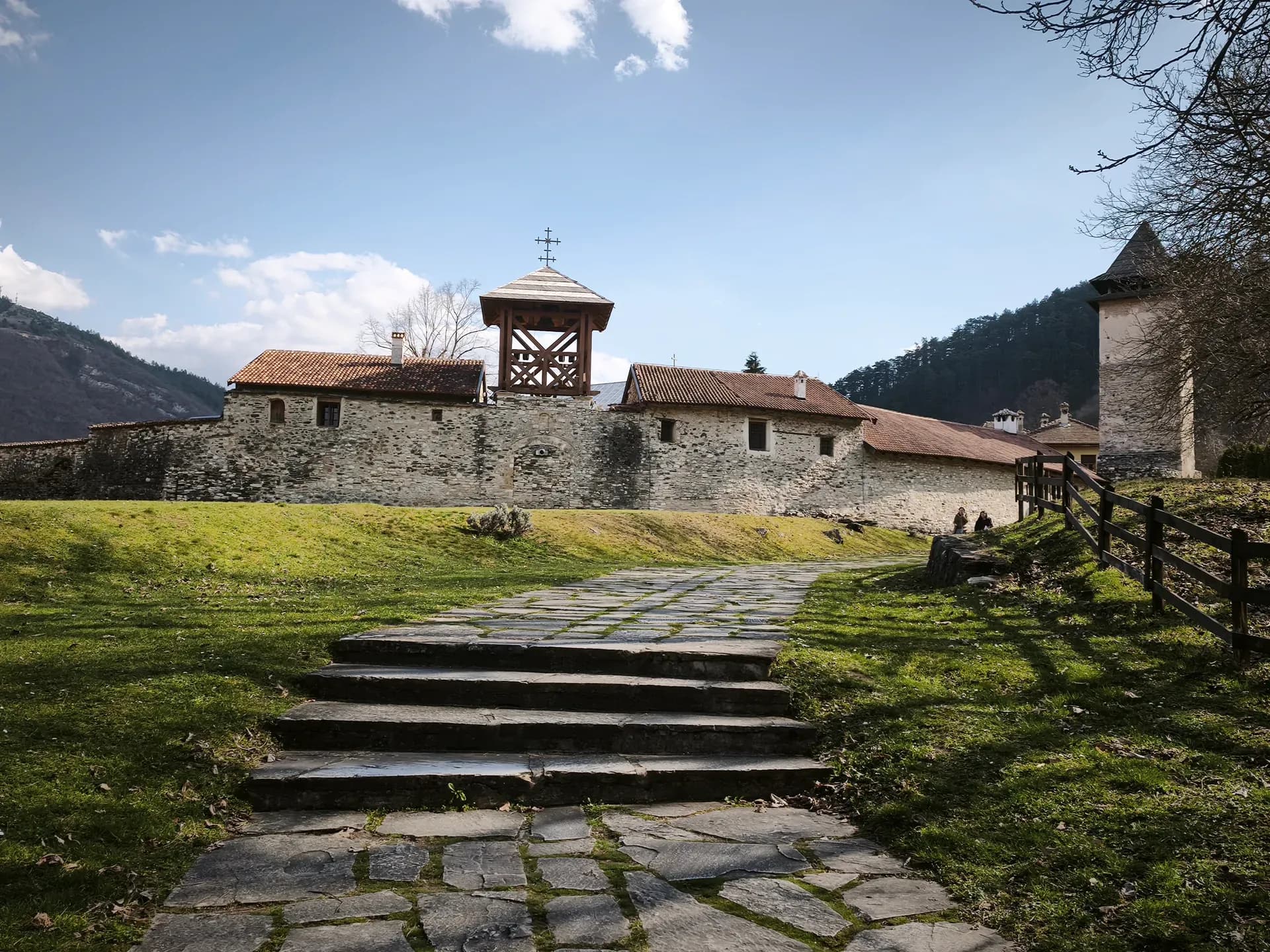
Tour of UNESCO-Protected Monasteries
- Andrej Ivanovski
In southern Serbia, in the area known as the “Valley of the Monasteries,” there are four monasteries of exceptional historical and artistic value.
They are deeply connected to the history of the Nemanjić dynasty, which established the medieval Serbian state, and they represent the spiritual foundations of Serbia.
Žiča Monastery
The monastery was built in the early 13th century by Stefan the First-Crowned, the first Serbian king, together with his brother, Saint Sava.
Its most striking feature is its red façade, as red was a color reserved exclusively for the ruling family at the time.
After the Serbian Orthodox Church gained independence, Žiča became the seat of the first Serbian archbishopric. It is also known as the place where Serbian kings were crowned.
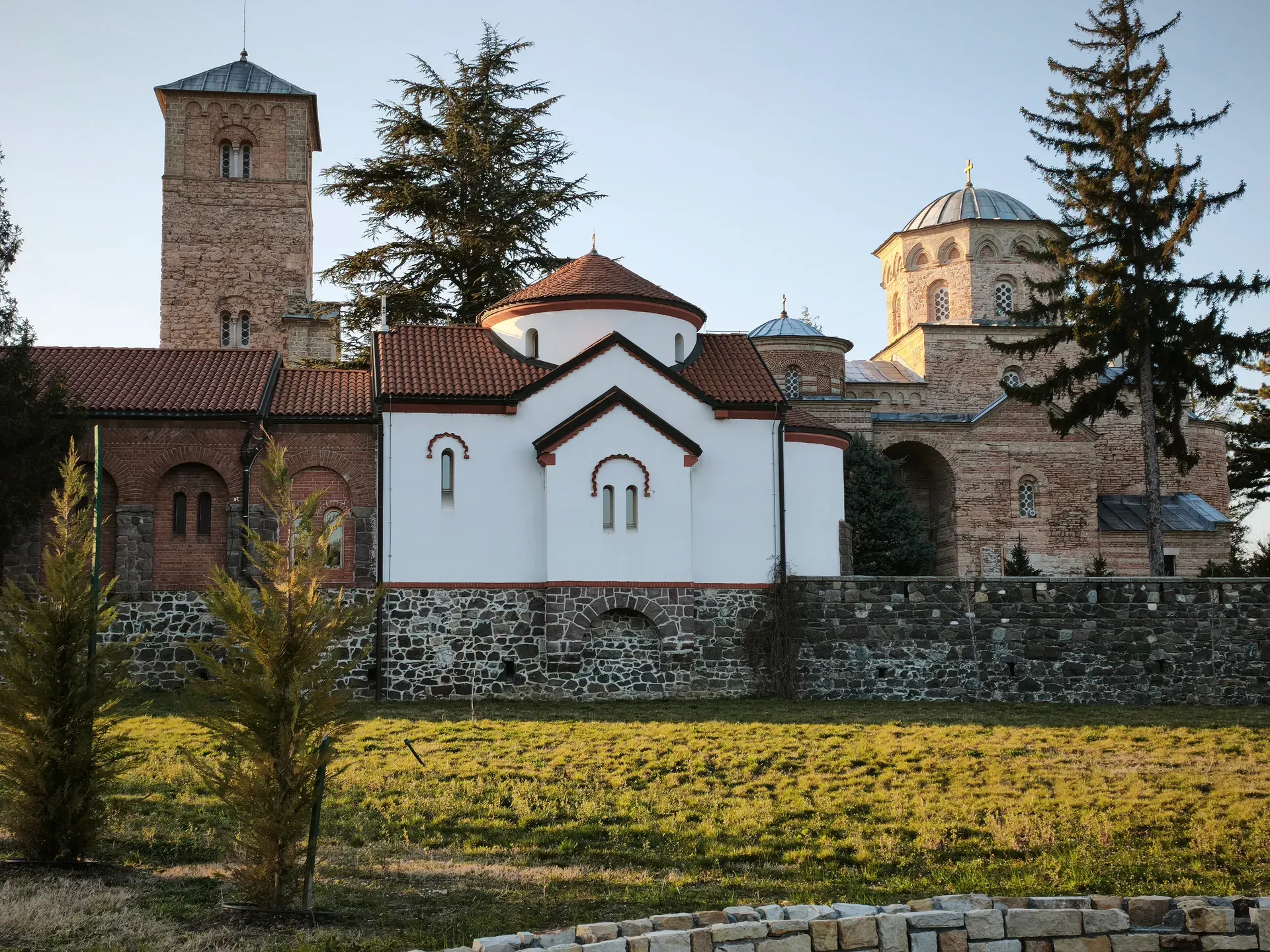
Studenica Monastery
UNESCO World Heritage Site
Studenica is regarded as the “mother of Serbian monasteries” and one of the greatest masterpieces of medieval Serbian architecture.
It was built in the late 12th century by Stefan Nemanja, the founder of the Nemanjić dynasty.
The Church of the Virgin, built from white marble, is a masterpiece of the Raška architectural style, which combines Romanesque and Byzantine elements.
The frescoes inside the church are exceptionally valuable. The fresco titled “The Crucifixion of Christ” is particularly notable and is considered one of the finest achievements of 13th-century Byzantine art. Its distinctive blue color is known as Studenica blue.
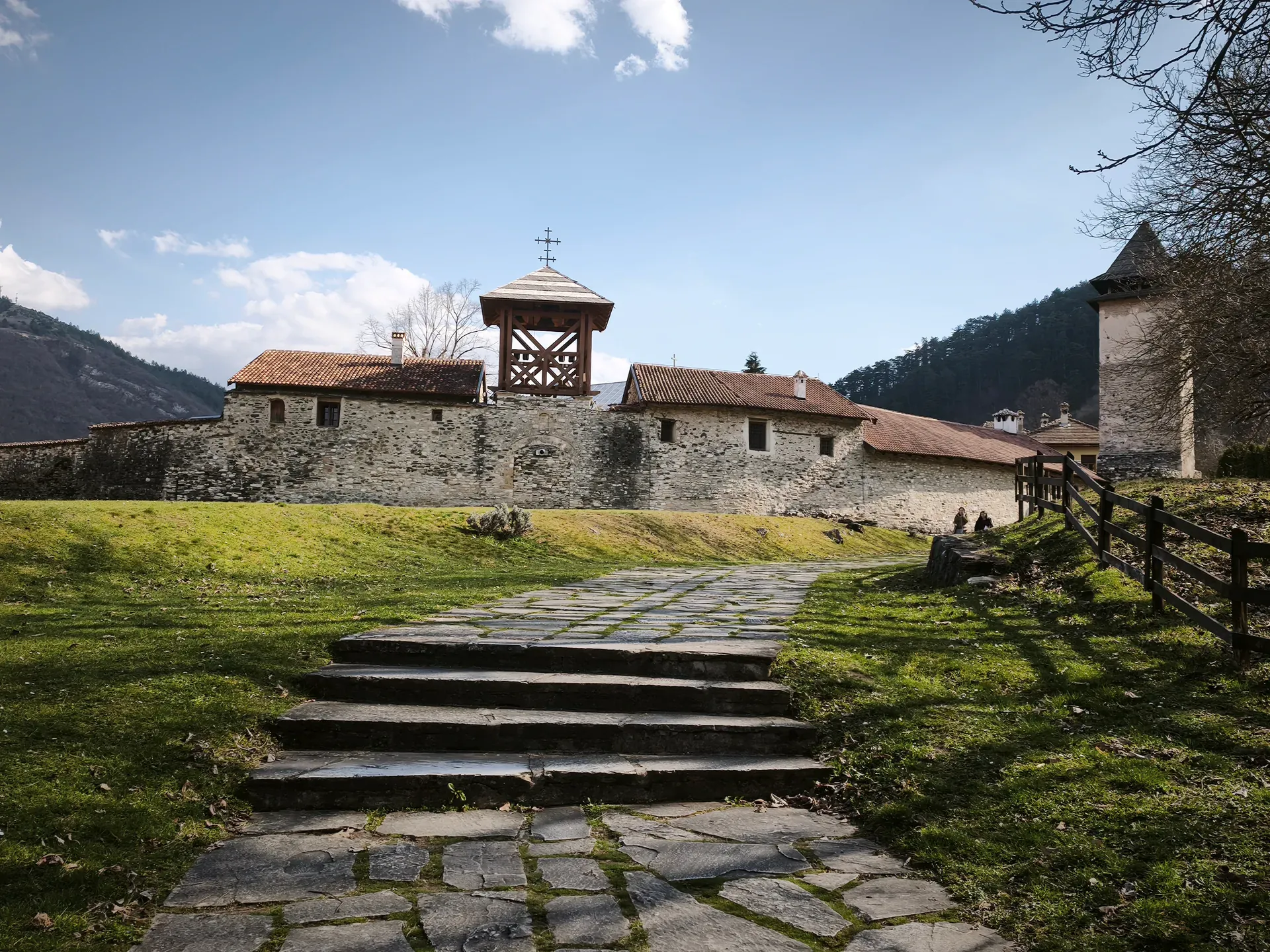
Đurđevi Stupovi Monastery
UNESCO World Heritage Site: Stari Ras and Sopoćani
The monastery was built in 1171 by Stefan Nemanja, the founder of the Nemanjić dynasty.
According to tradition, Stefan Nemanja was imprisoned in a cave by his older brother, with whom he was fighting for power. Nemanja vowed to Saint George that, should he be freed, he would build a monastery in his honor. After being released and coming to power, he fulfilled his vow.
The monastery once had two large towers, or pillars, from which it takes its name. It is considered one of the earliest examples of the Raška architectural style.
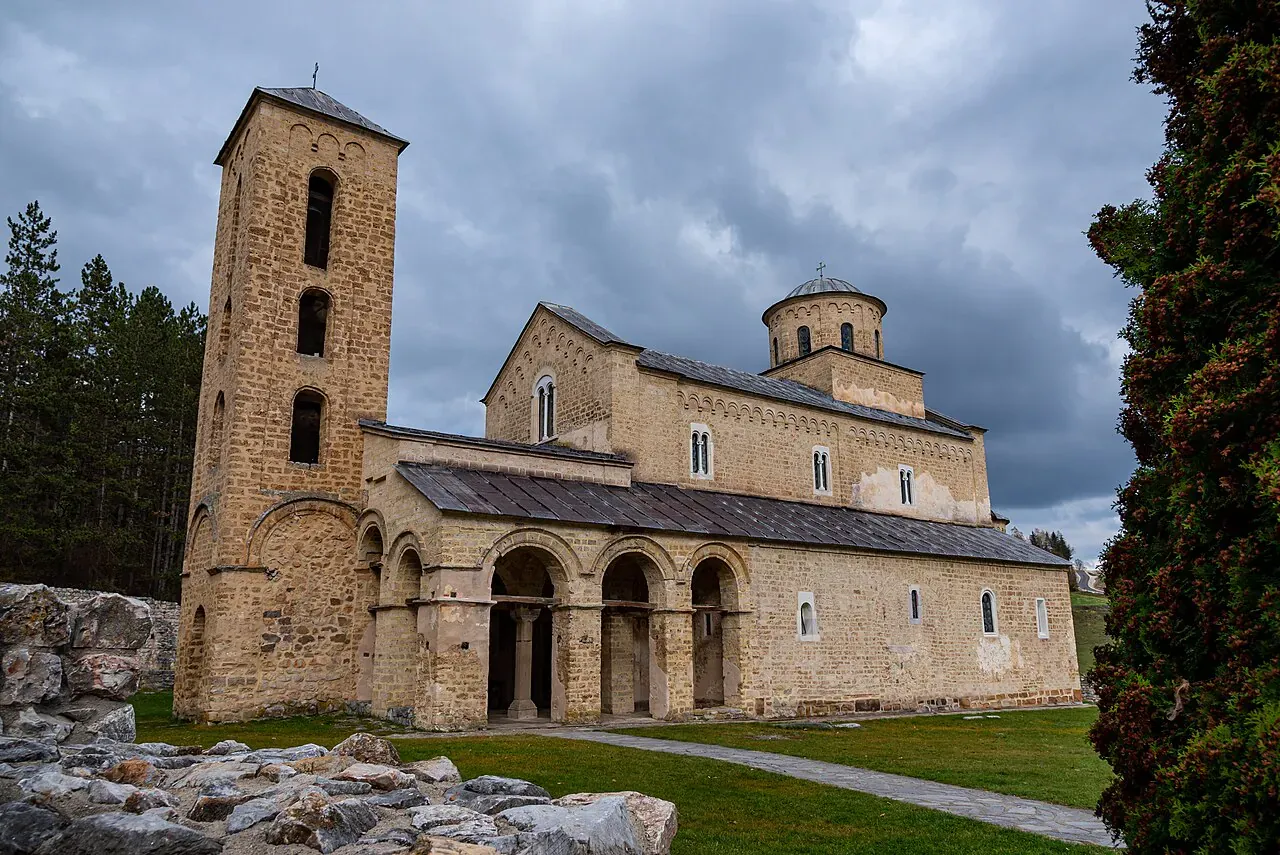
Sopoćani Monastery
UNESCO World Heritage Site: Stari Ras and Sopoćani
A Temple of Beauty That Foreshadowed the Renaissance
The monastery was built in the late 13th century by King Stefan Uroš I, near the ancient city of Ras and not far from present-day Novi Pazar.
The frescoes of Sopoćani represent the golden age of Byzantine art. Because of their expressive human faces, naturalistic depiction of the body, and sense of three-dimensionality, they are considered to have anticipated the Italian Renaissance to some extent.
The most famous fresco, “The Dormition of the Mother of God,” is a world-renowned masterpiece, painted on a monumental scale with a harmonious composition.
The Remains of Ras — Stari Ras
The Birthplace of the Medieval Serbian State
The remains of Stari Ras are located approximately 11 kilometers west of central Novi Pazar, on the steep Gradina hill at an elevation of around 750 meters, overlooking the valley of the Raška River.
This site was once an important transportation hub where routes from the west and south intersected before continuing eastward.
From the 9th to the 13th century, Ras was the capital of Raška, the first unified Serbian state. It was here that Serbian statehood and national identity began to take shape.
Galerius’ Palace — Gamzigrad–Romuliana
UNESCO World Heritage Site
Gamzigrad–Romuliana contains the remains of a fortified palace built by the Roman Emperor Galerius in the late 3rd and early 4th centuries. He intended to spend the remainder of his life there with his mother after retiring from the throne.
It is located approximately 250 kilometers southeast of Belgrade, near the Bulgarian border. The remains of Roman white columns, walls, and fortifications rise unexpectedly from the surrounding landscape.ins of Roman white columns, walls, and fortifications rise unexpectedly from the surrounding landscape.